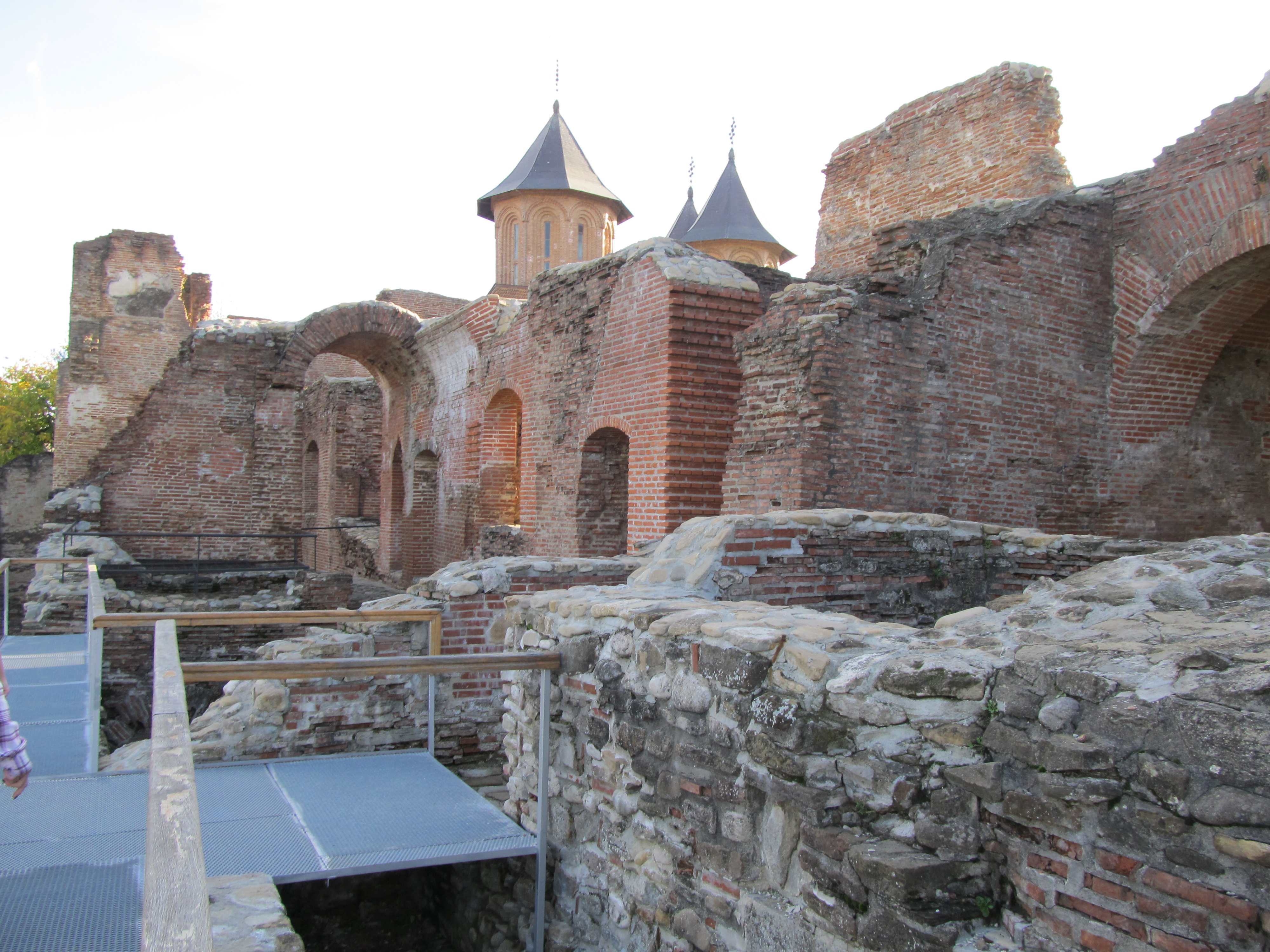
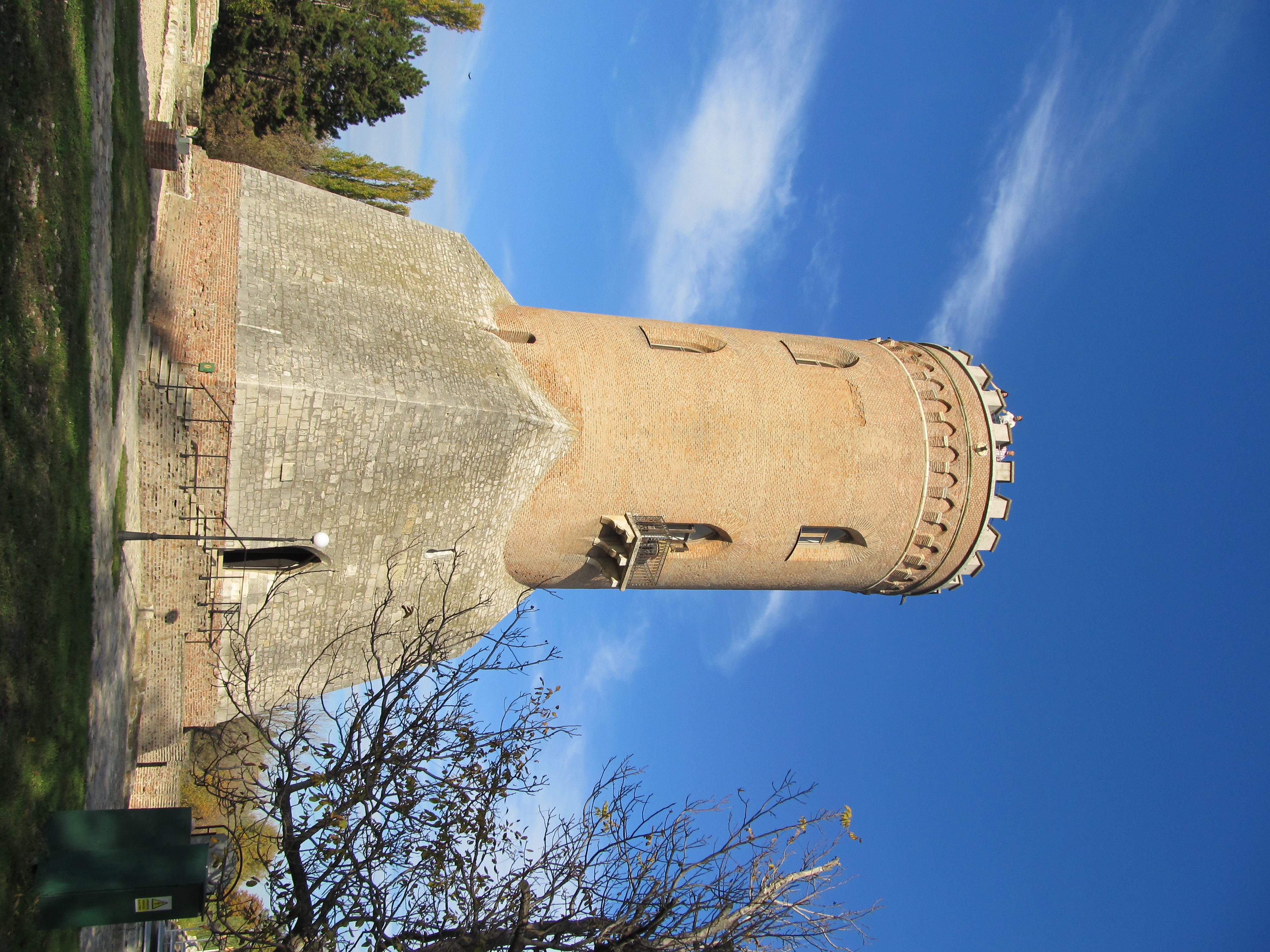
I've stood in the courtyard of the Princely Court at Târgoviște. This is the place where Vlad held his Easter feast in 1459, invited the boyars who had conspired against his family, and — once he had them assembled — had the older ones impaled while the rest watched, then marched the survivors fifty miles in their formal Easter clothes to rebuild his fortress at Poenari. The Chindia Watchtower, which Vlad used as an observation post, still stands in the middle of the complex. It houses a small museum now. It should have more visitors than it does.I've also been to Poenari — 1,480 concrete steps up a Carpathian mountainside, crumbling walls on a cliff above the Argeș River. And to Sighișoara, the medieval citadel where he was born in 1431. The building is still there, operating as a restaurant on the ground floor. And to Bran Castle, which is the one everyone calls Dracula's Castle, and which has a connection to Vlad that falls somewhere between thin and nonexistent. He may have passed through briefly. He certainly never lived there.Bran gets the tourists. Poenari is where he actually was. That gap tells you most of what you need to know about the distance between the Vlad the Impaler most people know and the one who actually existed.
Who He Was
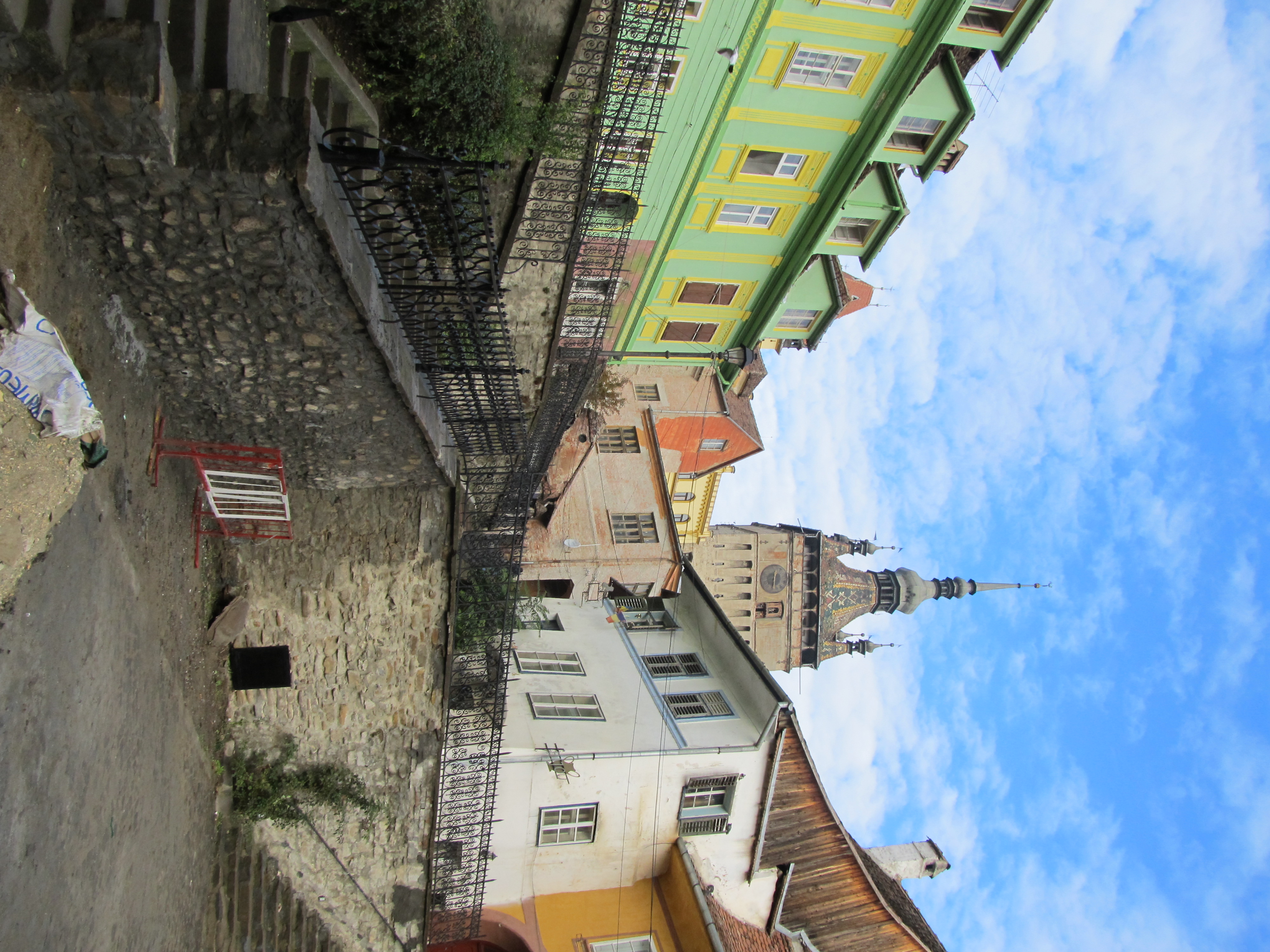
Vlad III was born in Sighișoara in 1431. His father was Vlad II, a member of the Order of the Dragon — a chivalric order founded by Holy Roman Emperor Sigismund to defend Christian Europe against the Ottoman advance. The order's emblem was a dragon. Dracul in Romanian means dragon. Dracula means son of the dragon. The whole etymology is a knightly coat of arms — not a curse, not a supernatural designation, a military order's insignia passed down as a nickname.Sighișoara — the medieval citadel where Vlad was born in 1431, still intactWhen Vlad was around twelve, his father sent him and his younger brother Radu to the Ottoman court as hostages. Political insurance: you stay here while your father governs, and if he stops cooperating, something happens to you. He spent roughly six years there. The Ottomans treated them reasonably well by the standards of that arrangement, but the arrangement itself was what it was.He came back to find his father murdered by the Wallachian boyars — the noble class — in coordination with Hungarian political interests. His older brother Mircea had been blinded with hot irons and buried alive. His younger brother Radu had converted to Islam and was fighting for the Ottomans. Vlad seized Wallachian power for the first time in 1448, lost it, retook it in 1456, and held it until 1462. Those six years are where the history is.
What He Did
The boyars who killed his father got the Easter feast first.In 1459, Vlad invited the nobles who had conspired against his family to the Princely Court at Târgoviște. The older ones he impaled on the spot. The younger ones he marched fifty miles to Poenari in their formal Easter clothes to rebuild his fortress on the cliff above the Argeș River. Many of them died during the construction. The ones who didn't built him his stronghold. His family's murderers built him his castle.The ruins of the Princely Court at Târgoviște — where the Easter feast ended badly for the boyarsThe Chindia Watchtower — Vlad's observation post, still standing in the center of the complexThere's an efficiency to that which is difficult to entirely argue with while also being obviously monstrous. That's the Vlad problem. Both things are true at the same time, and neither one cancels out the other.The impalement was his preferred method, and he deployed it at a scale that went past any reasonable military calculation. Estimates of total deaths during his reign run from 40,000 to 100,000. Even the conservative figure represents a significant share of the population of the kingdom he ruled. He impaled political enemies, criminals, foreigners, the poor, occasionally people for reasons not clearly recorded. His contemporaries — not modern historians applying modern standards, but people alive in the 15th century — found the scale of it exceptional. German pamphlets documenting his methods circulated during his lifetime. He was aware of them. He wasn't particularly bothered.The most documented episode is the Forest of the Impaled. In 1462, Sultan Mehmed II — who had taken Constantinople nine years earlier, who commanded an army that dwarfed anything Wallachia could field — marched on Târgoviște. Outside the city, he found approximately 20,000 impaled bodies, mostly Turkish prisoners, arranged in the fields. Ottoman accounts from the campaign describe Mehmed turning his forces around. Whether the exact number is right matters less than what it means: Mehmed, who had ended the Byzantine Empire, looked at what was outside that city and went home.That's the contradiction. He held a small Christian kingdom together against the dominant military power of the 15th century, at a moment when every neighboring territory was falling or capitulating. He also did things that went past any definition of necessity by any moral framework operating at the time — including the medieval one. Both of those things are true simultaneously. There's no version of the history that resolves the tension between them.The Romanian Orthodox Church canonized Vlad as a saint in 2023. From inside the country he actually defended, that reads differently than it does from the outside. Neither reading is entirely wrong.
The Vampire Part
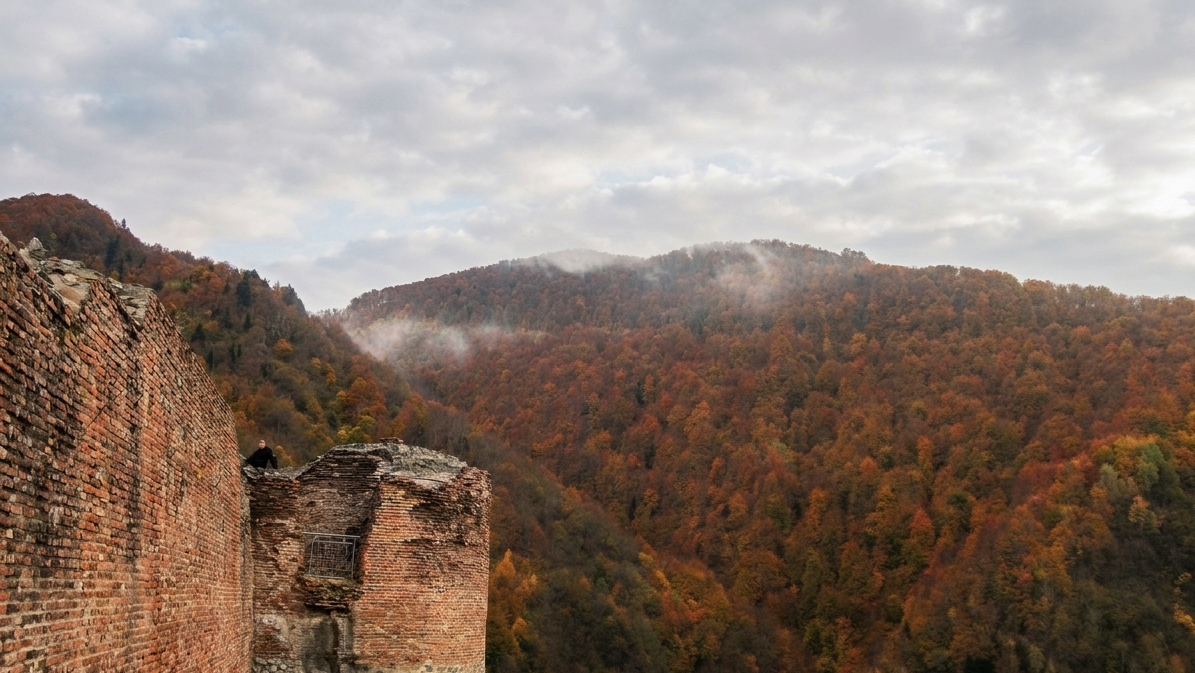
Bram Stoker published Dracula in 1897. The connection to Vlad is partial. Stoker's Count is from Transylvania; Vlad ruled Wallachia and based his operations at Târgoviște and Poenari, neither of which is in Transylvania. Stoker clearly knew the name and the reputation — the historical Vlad was well documented in German and Hungarian sources — but the vampire mythology itself comes from Eastern European folklore about the undead that predates the novel and has no specific connection to Vlad. Stoker didn't invent the vampire. He gave it a face, a location, and a Wallachian nickname.For the next century, Dracula the vampire eclipsed Vlad the voivode in most of the world's imagination. The result is Bran Castle: a 14th-century fortress in Transylvania with no serious documented connection to Vlad that gets marketed as Dracula's Castle. It's impressive. It's well-maintained. The queue is long. It's also not where any of the history happened.Fortress Poenari — where the history actually happenedPoenari is 1,480 steps, crumbling walls, and a view of the Argeș valley that goes on forever. No gift shops. His wife threw herself from the battlements into the river below rather than be taken by the Ottomans in 1462. He escaped through a secret passage and survived, because of course he did.The real Vlad is more interesting than the fictional one. He almost always is.
🎭
Unforgettable Experiences
Romania has incredible experiences worth booking in advance