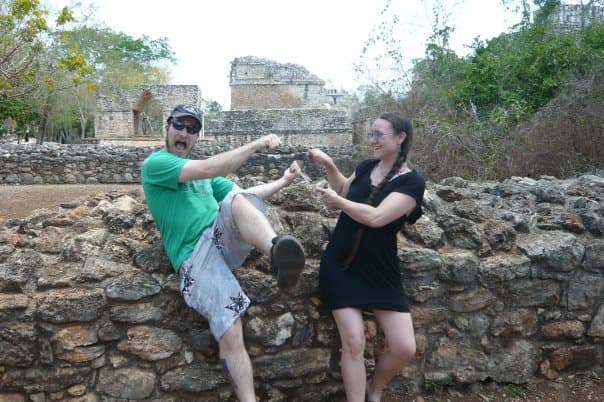
Chichen Itza gets approximately 2.5 million visitors a year. They built a secondary road to handle the buses. You cannot climb the main pyramid — El Castillo — because tourists wore the steps down to a slip hazard and someone died. There are vendors every fifteen feet selling the same obsidian jaguar figurines. The cenote on-site is sacred and has been used as a trash heap and a mass grave and, for a long time, a tourist attraction where people threw coins.I went. I'm glad I went. The scale of it is real and it earns its reputation.Twenty-five kilometers north is Ek' Balam. My sister found it. She did the research before we left, rented us a car, and drove us there the morning after Chichen Itza. I had no idea what I was walking into.At Ek' Balam, you can still climb the pyramid.
What It Is
Ek' Balam means Black Jaguar in Yucatec Maya. It was a Late Classic Maya capital — active roughly 600 to 900 CE — and at its peak it was one of the most powerful cities in the northern Yucatan Peninsula. The site covers about twelve square kilometers. The main pyramid, the Acropolis, stands 32 meters tall, which makes it one of the larger structures in the Maya world. You climb it on a wooden staircase bolted to the side and you do it in the sun with a rope to hold onto, and when you get to the top you can see across the whole canopy in every direction.There are maybe thirty other people there on a normal day.The dynasty that built it was called the Balam dynasty — jaguar dynasty, the name is not coincidental. The most documented ruler was Ukit Kan Le'k Tok', who reigned from roughly 770 to 801 CE. He is the reason the site matters to archaeologists beyond its scale: in 1994, excavators working on the Acropolis opened a sealed chamber inside the pyramid and found his tomb intact.What was inside the tomb is the part that stops you.The chamber walls were lined with stucco sculpture — figures, glyphs, reliefs — in a state of preservation that almost never survives in Maya archaeology. The centrepiece is a doorway framed by a massive fanged mouth, the entrance to the underworld, with a winged figure flanking it that some researchers read as a Maya angel — a concept without a lot of precedent in Mesoamerican iconography. The whole thing had been sealed and left alone for eleven centuries. When they opened it, it looked like it had been finished recently.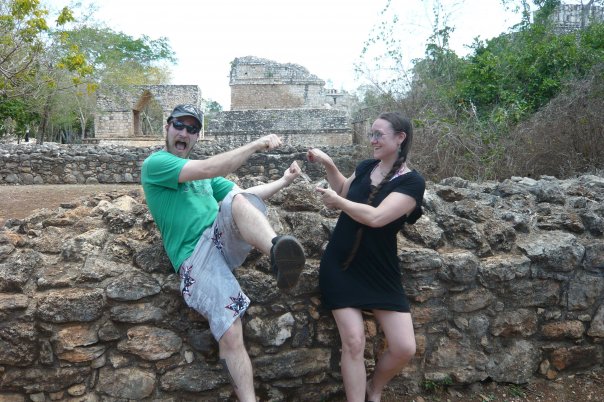
Why Nobody Knows About It
The short answer is that Chichen Itza had a 150-year head start in the archaeological record.European scholars were documenting Chichen Itza seriously from the mid-1800s. John Lloyd Stephens wrote about it in 1843. By the time systematic excavation started, the site had been in the Western historical consciousness for generations. The Carnegie Institution ran major excavations there in the 1920s and 30s. By the time UNESCO designated it a World Heritage Site in 1988, it had been the dominant Maya site in the global imagination for over a century.Ek' Balam got its first serious scientific excavation in 1987. The tomb wasn't discovered until 1994. The site is maybe 30% excavated. It is, by the standards of the discipline, brand new.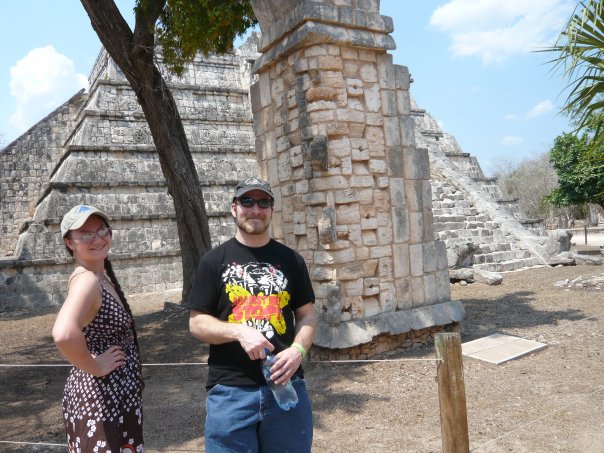
What It's Like
My sister booked us a room at Genesis Eco-Oasis, a small lodge that sits directly adjacent to the ruins — close enough that you can hear the birds from the site in the morning. I am not a morning person. I became one temporarily.The climb up the Acropolis is not casual. It's steep and it's long and the wooden steps are narrow and the sun is absolute. At the top there's a small platform and a view of unbroken canopy in every direction and the silence that exists on top of things when you've earned it. There were maybe a dozen people up there when we climbed. You could have a conversation at a normal volume.The tomb chamber itself is protected now — you can see it from a viewing platform on the pyramid's face, but you can't go in. The stucco frieze is visible from a distance. It's worth the climb just for that.After Chichen Itza, the scale of what exists twenty-five kilometers away and how few people know about it is difficult to stop thinking about. Both sites are real. Both are significant. One of them has bus infrastructure and vendor alleys and a policy against climbing because of the foot traffic damage. The other one you can still put your hands on.That's not a knock on Chichen Itza. It earned its reputation over two hundred years. But the reputation is not the whole picture, and the whole picture is worth the rental car.🎭
Unforgettable Experiences
Yucatan has incredible experiences worth booking in advance
Affiliate links • Helps fund my adventures at no extra cost to you
📚
Further Reading
Books about Yucatan — history, culture, and the context that makes travel richer
Affiliate links • Helps fund my adventures at no extra cost to you
Chichen Itza is worth going to. Go to Chichen Itza. But rent a car and drive twenty-five kilometers north first.
Support My Travels
Affiliate links help fund my adventures • No extra cost to you

Affiliate link — helps fund the adventures at no cost to you