Most of our family trips required a certain amount of runway. Research, planning, logistics, the usual negotiation between what's interesting and what's actually reachable. The Romania trip had none of that. My mom saw an ad online for a G Adventures tour called Halloween in Transylvania, sent a message to my sister and me along the lines of "are you in?", and before anyone had a chance to overthink it, we were booked. That was October 2012. It remains the most impulsive trip we've ever taken, and it set a bar that a lot of more carefully planned trips have failed to clear.It was also G Adventures' first time running the tour. We didn't know that going in. The tour was designed as an idea from our amazing tour guide. Since he designed it he got to be the inaugural guide, and us the guinea pigs for this amazing trip.
Bucharest
Bucharest is where Romania puts you to start. The city is loud and layered — Communist-era boulevards wide enough to march an army down sitting alongside Ottoman remnants and 19th-century architecture that's been through a lot and looks like it. We arrived a day or two before the tour kicked off and walked the streets near our hotel, which is usually enough to get a feel for a place. It was.The tour officially began with a group dinner at Caru' cu Bere, the oldest restaurant in Bucharest, which opened in 1879 and has spent the intervening century and a half making everyone feel slightly underdressed. The interior is one of those rooms where you walk in and stop talking for a second. Stained glass, vaulted ceilings, carved wood everywhere — the kind of place that takes Gothic revival and treats it as a minimum standard rather than an aesthetic choice. I don't remember what I ate. I remember the room.Caru' cu Bere — Gothic revival as a minimum standard
Curtea de Argeș and Fortress Poenari
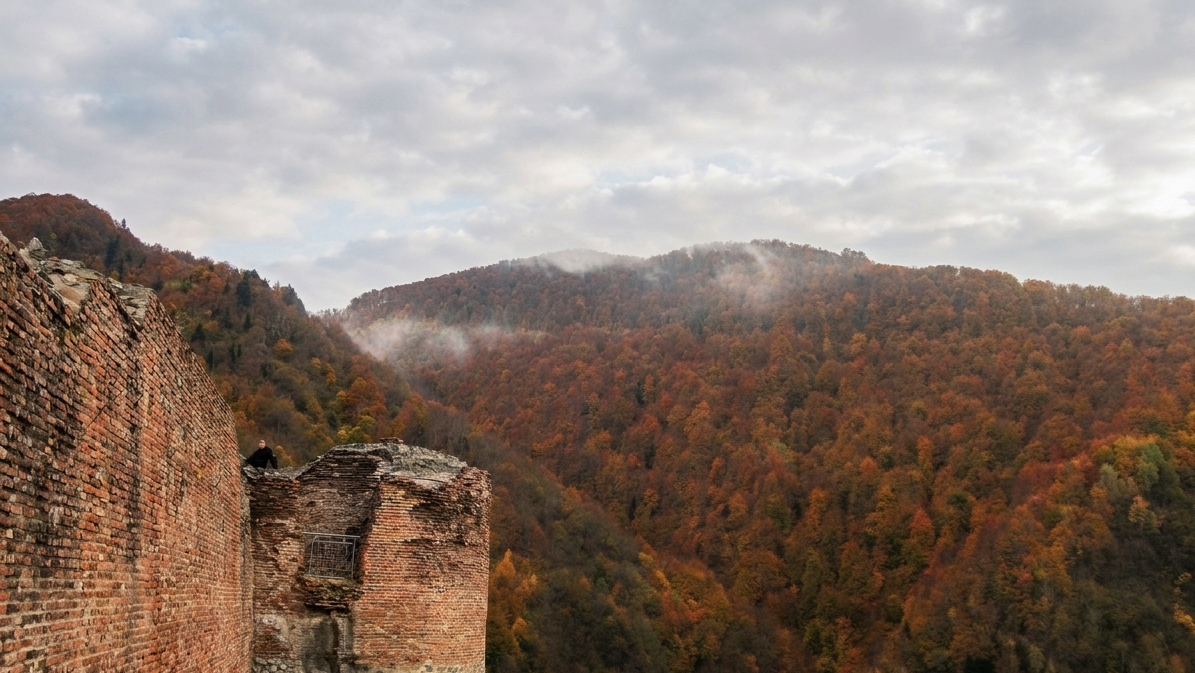
From Bucharest, the tour moved inland and started working through the sites. The first real stop was Curtea de Argeș Cathedral, a 16th-century monastery church with ornately carved stonework that looks almost Moorish from the outside — a strange and interesting detour, and exactly the kind of thing you find yourself standing in front of and realizing you'd never have sought it out on your own. Worth seeing. The real draw that day came next.Curtea de Argeș Cathedral — Moorish stonework in the middle of the CarpathiansFortress Poenari sits at the top of 1,480 concrete steps cut into a Carpathian mountainside. The steps are uneven, steep in places, and entirely worth it. Poenari is what people mean when they say Dracula's castle, whether they know it or not. Bran Castle gets the tourism dollars and the gift shops, but Poenari is where Vlad Tepeș — Vlad III, Vlad the Impaler, take your pick — actually based his operations during the 1460s. He had the fortress rebuilt and expanded using captured Wallachian boyars as forced labor, marching them fifty miles from Târgoviște and working them until the castle was done. Many of them didn't make it. The boyars had conspired against him, so this was also the punishment, which is a fairly Vlad way of solving two problems at once. When the Ottomans eventually came for him in 1462, legend holds that his wife threw herself from the battlements into the Argeș River rather than be taken. Vlad escaped through a secret passage and survived, because of course he did.Fortress Poenari — the real Dracula's castle, crumbling walls on a Carpathian cliffWhat's left now is a set of crumbling walls on a cliff with a view that goes on forever, and standing up there, looking out over the mountains, I remember thinking Romania is genuinely beautiful. I still think about that view.The view from Poenari — the Argeș valley stretching into the Carpathians
Sibiu and Steven
After Poenari we made our way to Sibiu. Steven — our guide for the Halloween portion of the trip — took the group out to find dinner the first night, spotted a small pizzeria the way he always seemed to spot the right place, and we all piled in. The pizzas that came out were the kind of thing you don't expect when you wander into somewhere with no plan. At some point while we were eating I did the math in my head on what we'd just ordered. I told my mom and sister: these are less than four dollars each. That landed the way it deserved to. Later that same night we found our way into the first of what would become a recurring Romanian experience — the cellar bar. They tend to be underground, beneath restaurants, low-ceilinged and stone-walled and operated entirely without ventilation. The smoke sat like a second atmosphere.The next morning Sibiu made its case in daylight too. The old town is walkable and compact, and there's one detail about the architecture worth mentioning: the dormer windows built into the rooftops are shaped like eyes. Not metaphorically — the framing and shutters genuinely read as eyelids. Every building on the street has them, all of them looking down at you. It's either charming or unsettling and possibly both.The famous "eyes" of Sibiu — every rooftop on the street has themA word about Steven. He's English, works with multiple tour companies, and travels constantly — not a Romania specialist but a genuinely worldly guide who treats every destination like a puzzle worth solving. He was the best tour guide I've had before or since, and I've had a few now. If you're planning any kind of trip and want someone worth booking, he can be found on Facebook under the name Steven T. Minchin and is worth a message. For Romania specifically, the couple behind UnzipRomania joined us for the final stretch of the trip as private guides and were equally excellent — deeply knowledgeable about the country in a way that only comes from actually living it. They're bookable through Instagram at @unzipromania.The group navigating Sibiu's medieval alleyways after dark
Corvin Castle: The Halloween Party
The main event was still ahead. Corvin Castle — Hunedoara Castle, if you want its other name — is one of the best-preserved Gothic castles in Europe, a 14th-century fortress with towers, a drawbridge, and the full dramatic silhouette you picture when someone says "medieval castle" and actually means it. We arrived early enough to tour it like regular visitors, which was worth doing on its own. The courtyards, the chapel, the Knight's Hall, the tower where Vlad the Impaler was reportedly held prisoner for years by the Hungarian regent who didn't fully trust him — the place has layers. We explored everything we could get into.The whole group in front of Corvin Castle — before the costumes came outCorvin Castle's Gothic chapel facade — gargoyles includedBut the reason we were at Corvin Castle on October 31st specifically was the Halloween party.G Adventures had arranged an evening event inside the castle for their group and one other tour company's group. The total headcount — guests, staff, locals — was somewhere around a hundred people, which in a castle of that size felt intimate. The kind of thing where you recognize faces by the end of the night. My costume that year required essentially no effort on my part. I had long hair, a full beard, and had been told by enough strangers over the years what I apparently resembled that it had long since become a bit. I leaned into it fully — robes, the whole thing. Jesus of Nazareth attended a Halloween party at a 14th-century Romanian fortress and it went over extremely well. I don't think a single person didn't want a photo. My sister's costume was in another category entirely. My mom had handmade it — Daphne transforming into the tree from Greek mythology, bark and branches worked into the fabric, actually becoming the thing she was named after. It was the best costume there.The family at Corvin — Jesus, Daphne-the-tree, and momThe Australian couple in custom-fitted vampire attire with professional-grade fangs won the contest anyway. They earned it.The winners — the Australian vampire couple with their trophyThe party ran deep into the night. The drinking and dancing continued well past when most sensible people had filtered back to the hotel, at which point we stayed with the locals. Romanian folk dancers in full traditional dress had performed earlier in the evening; by this point in the night the lines between performance and party had dissolved entirely.Dancing with the locals inside a 14th-century Romanian fortress on Halloween nightEventually the last shuttle became the party, a group of us filling the hotel lobby until somewhere around five in the morning, nobody ready to call it. In between all of that: wandering the actual ruins of an actual castle, partly in the dark, partially drunk, on Halloween night, in Romania. The castle where Vlad the Impaler was once imprisoned. I am aware that not every travel experience can be summarized so cleanly, but that one more or less summarizes itself.The group in costume outside Corvin Castle at night — that's the castle behind usFor anyone trying to replicate this: G Adventures no longer holds their Halloween event at Corvin Castle. They've moved to a larger venue elsewhere. As of this writing, there's one tour company that still runs the Halloween party at Corvin specifically — a smaller, more intimate affair, well under a hundred people. That's the version I'd recommend.
Sighișoara
Sighișoara came next, and I'll be honest: the nightly socializing had started to blur the edges of my recall somewhat. What I can tell you is that Sighișoara is a UNESCO World Heritage Site and one of the best-preserved medieval citadels in Europe — it's also the town where Vlad the Impaler was born in 1431, a detail the ground-floor restaurant now operating inside his birth house seems entirely at peace with. We went out one evening and walked through a small cemetery at night, which is exactly the kind of thing you do on a tour called Halloween in Transylvania. My sister came close to falling into a freshly-dug open grave, which she handled with more composure than most people would. The cemetery did not claim her.A nighttime walk through a medieval cemetery in Sighișoara — Romania doesn't half-step the atmosphereThe hotel is something I actually remember clearly. The building was hundreds of years old. The hallway lighting ran on motion sensors, which sounds like a modern convenience until you're walking down a pitch-black medieval corridor at night and the lights come on one zone at a time. Not the whole hall — just the section you're in. You take a few steps, and the light behind you clicks off. A few more steps, and you move out of one pool of light into darkness, then the next sensor catches you and the next light comes on. You're illuminated in a small bubble, moving through a dark building, one step at a time. Add the large unused pool room converted to storage, the stone alleyways outside, and the general atmosphere of the town, and you've assembled something that doesn't need to try very hard to be creepy.Sighișoara from above — a UNESCO citadel with mountains and mist
The Final Stretch
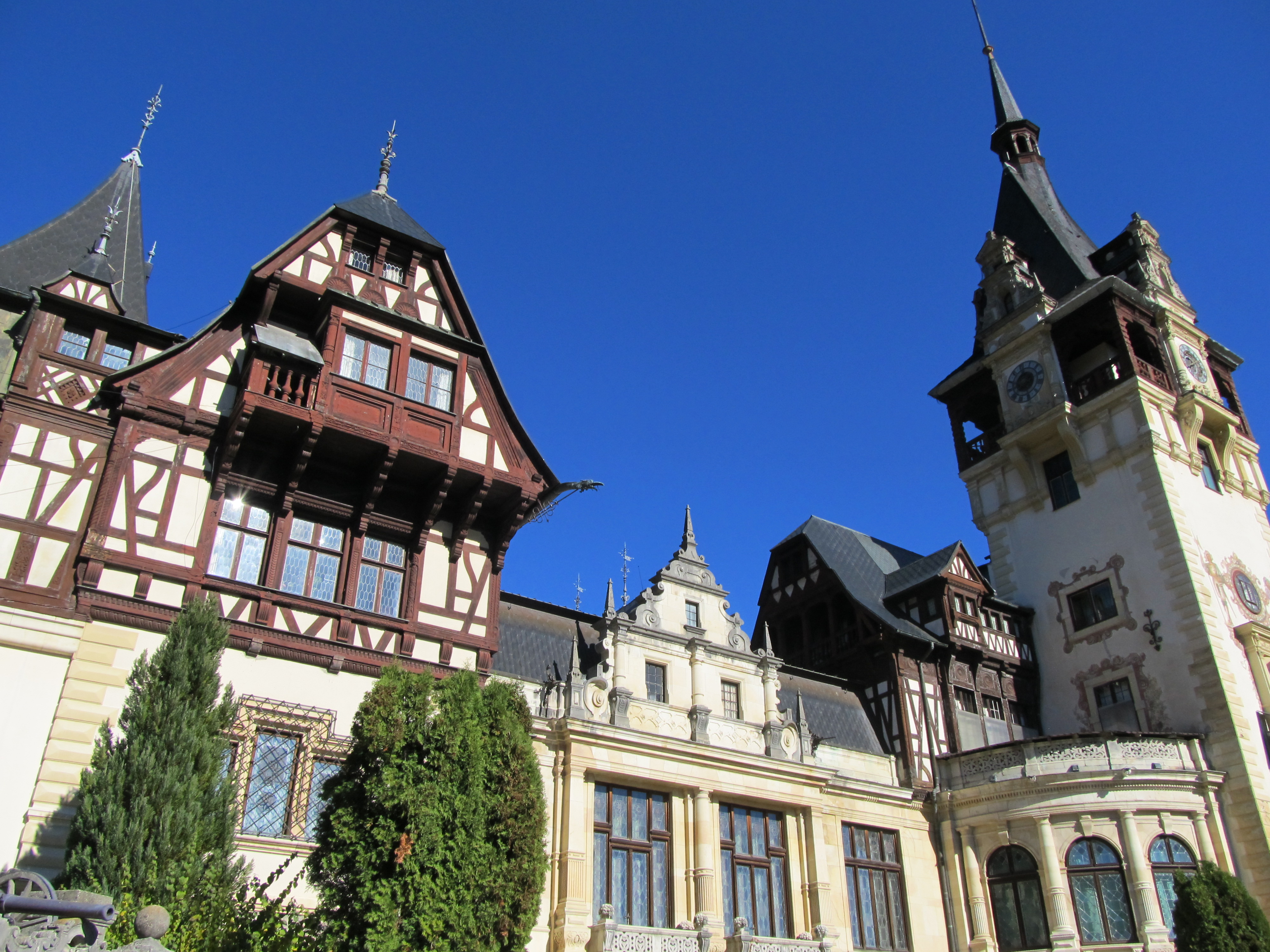
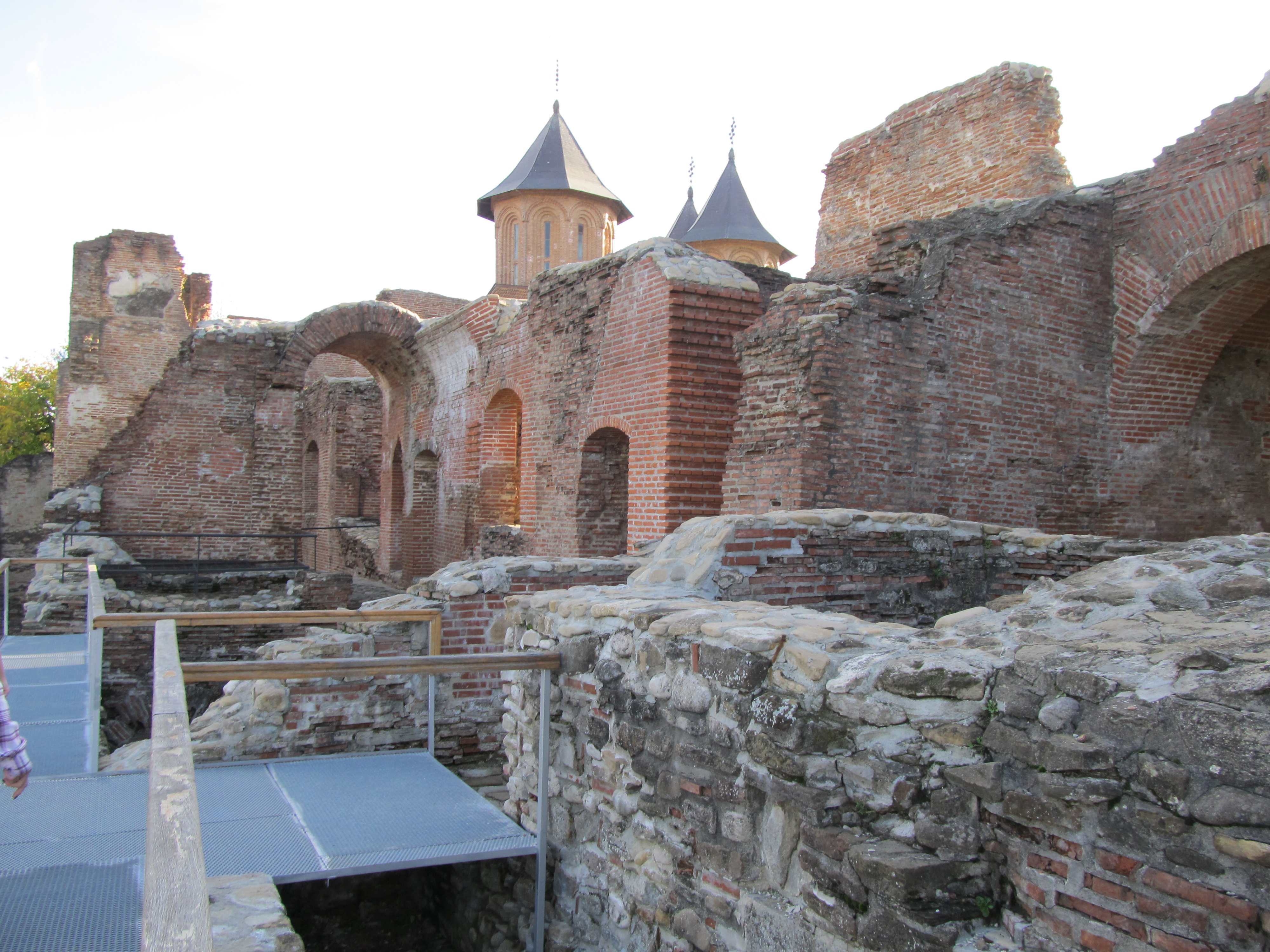
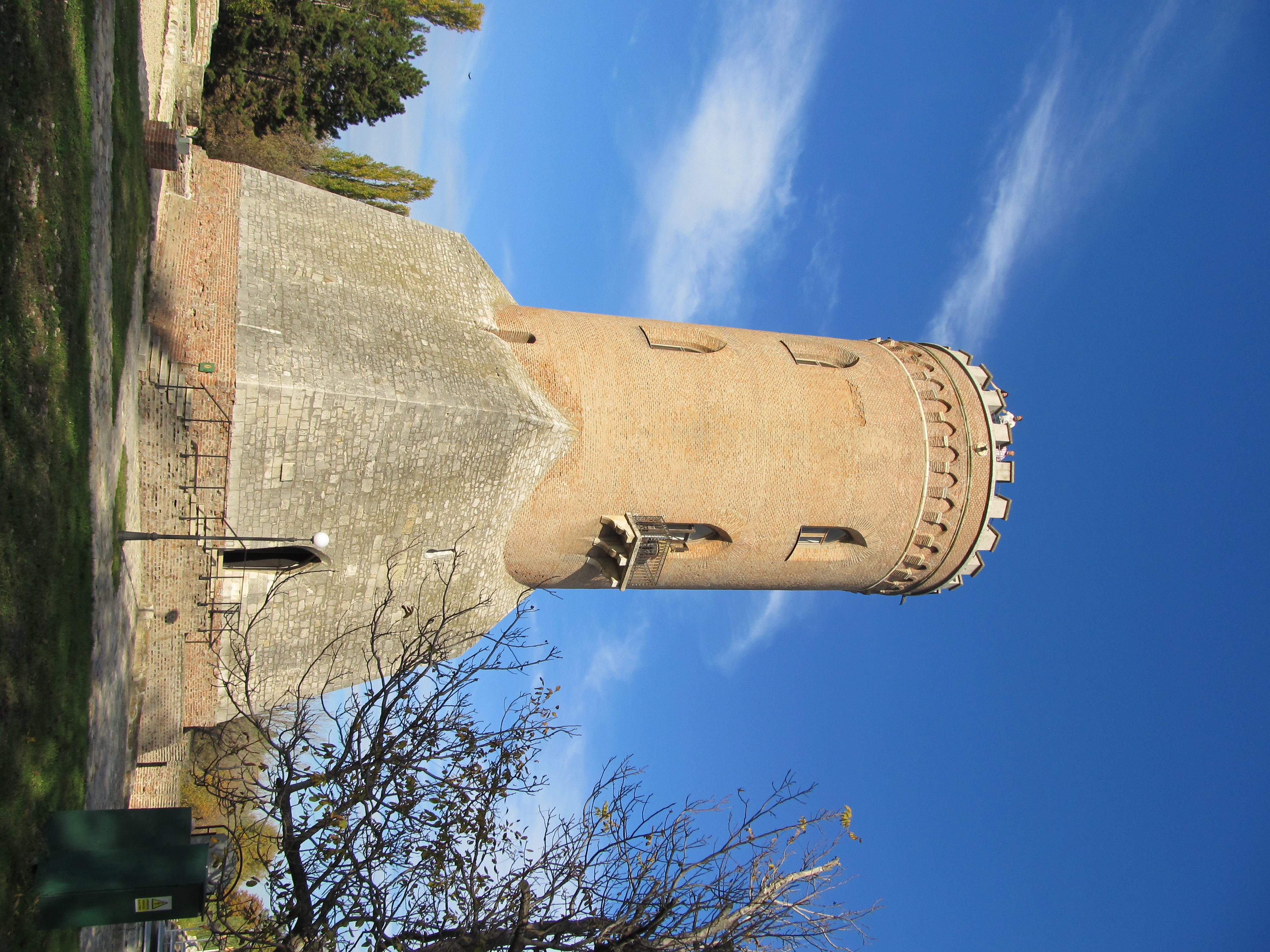
A few stops rounded out the tour before we made it back to Bucharest. The Viscri fortified church — a Saxon Lutheran church surrounded by defensive walls, the kind of thing that exists because history in this part of Europe has never been casual about its threats — was a quiet and genuinely interesting detour. Then Bran Castle, which I'll say this about: it's impressive, large, well-maintained, and its actual connection to Vlad the Impaler is somewhere between thin and nonexistent. He may have passed through briefly. The castle's current fame is primarily a 20th-century marketing decision. Still worth seeing. Still not Poenari.Bran Castle's inner courtyard — impressive, well-maintained, and loosely connected to Dracula at bestPeleș Castle was on the itinerary but was under renovation when we arrived, so we got the exterior only. This was unfortunate because Peleș is, by most accounts, one of the most ornate castle interiors in Europe — a 19th-century royal palace in the Carpathians built by King Carol I, with over 160 rooms and enough decorative enthusiasm that photographs of the interior look almost impossible. The outside is still substantial. We made do.Peleș Castle — a 19th-century royal palace in the Carpathians that earns every superlative thrown at itThe ornate facade detail — deer heads, carved woodwork, and stained glass, and that's just the outsideThe interior was closed for renovation, which remains a genuine grievanceBack in Bucharest, the G Adventures portion of the trip was over, but we weren't done. My mom had booked a private guide through Tours by Locals for the final stretch, and the couple she found — now operating under @unzipromania on Instagram — took us on what I can only describe as an early version of what would become our standard Atlas Obscura scavenger hunt approach to travel. First stop: Târgoviște, specifically the Curtea Domnească — the Princely Court that served as the Wallachian capital from the late 14th century until 1714. This is the place where Vlad held his infamous Easter feast in 1459, invited the boyars who had conspired against his family, and — once he had them assembled — had the older ones impaled on the spot and forced the rest to march to Poenari in their formal clothes to build him a castle. The Chindia Watchtower, which Vlad used as an observation post and which now houses a small museum of his life, still stands at the center of the complex. It's one of those places that feels like it should have more visitors than it does.The ruins of the Princely Court at Târgoviște — where Vlad's Easter feast ended very badly for the boyarsThe Chindia Watchtower at Târgoviște — Vlad's observation post, still standingThe last stop I remember from the trip is the salt mine. Slănic Prahova sits about 100 kilometers north of Bucharest, and the main draw is the Unirea Mine — one of the largest salt mines in Europe, a fact that only becomes real once you're inside it. We took an elevator 208 meters underground, the kind of elevator that makes you briefly consider your choices, and stepped out into something genuinely unexpected. The chambers are 54 meters high, the walls white and gray, the air cooler and cleaner than anything on the surface — the salt content does something to it that's hard to describe but immediately noticeable. There's a playground down there. For children. It makes more sense once you're standing in it than it sounds from the outside. Massive, strange, and completely worth it.
Why It Still Matters
Romania was the beginning of something. Not just a good trip — the start of what became a yearly tradition, a trip every September for mom's birthday, each one a new country or region. We've done tours since then and we've done it ourselves, but we've always known where we're going and when. The Halloween in Transylvania tour was the exception: a picture my mom saw online, a quick question to my sister and me, and we were booked before anyone thought too hard about it. It's still the most impulsive travel decision we've ever made. It's still one of the best trips we've taken.